


 English
 Türk
 عربى
 Tiếng Việt
 русский
 Bahasa Melayu
 中文简体

Home / News / Industry News / What Masking Tape Manufacturers Should Check Before Scaling SBR Latex Production

A masking tape formulation may perform well in laboratory trials but behave differently when production moves to a larger coating line. Changes in mixing, coating, drying, storage, and converting can expose problems that are difficult to notice during small-scale testing. For manufacturers developing SBR Latex for Masking Tape, the key challenge is not simply finding a latex with suitable adhesive properties, but making sure the material works consistently throughout the production process.
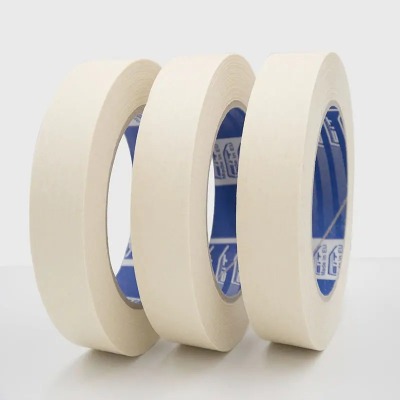
Before changing a latex grade, engineers should look at the complete tape construction. Crepe paper, primer, adhesive, release treatment, and winding conditions can all affect the final product. A change in one component may alter how the adhesive wets the backing or how the finished tape unwinds.
This is why a latex should be evaluated within the intended tape structure rather than tested as an isolated raw material.
Laboratory coating can provide useful information, but production equipment introduces different mixing and coating conditions. Viscosity, dispersion quality, drying behavior, and coating uniformity become more important as the process moves toward continuous manufacturing.
Production teams can monitor several practical indicators:
These observations can help identify process-related problems before they affect a larger volume of finished tape.
SBR latex is rarely used alone in a pressure-sensitive adhesive formulation. Tackifiers, additives, pigments, fillers, and other components may be introduced according to the desired tape characteristics. Compatibility between these materials can influence dispersion, stability, coating behavior, and final adhesion.
For this reason, manufacturers should carry out controlled laboratory trials when introducing a new latex or changing the formulation ratio. A smooth mixing process is useful, but finished-tape testing remains necessary before production decisions are made.
Masking tape often travels through multiple stages before reaching the end user. It may be stored at a warehouse, transported across regions, and kept by distributors before application. Temperature and humidity exposure during these stages can affect adhesive behavior and the physical condition of the roll.
A good development program should therefore include aging and storage evaluation rather than relying only on fresh samples. Comparing adhesive performance before and after storage can reveal changes that may otherwise appear as customer complaints later.
For private-label tape brands and distributors, batch-to-batch consistency is closely connected to customer satisfaction. A tape that feels different from one shipment to another can create problems for downstream converters and end users, even when the nominal formulation has not changed.
Raw material consistency, production records, incoming inspection, and finished-product testing can work together to reduce unnecessary variation. From a manufacturer's perspective, this quality-control approach is just as important as selecting the adhesive formulation itself.
When evaluating an SBR latex supplier, buyers should look beyond a basic technical datasheet. Application experience, technical communication, sample support, and documentation can make the material evaluation process easier. A supplier that understands adhesive and masking tape applications can also help engineers identify suitable testing directions without making unsupported performance claims.
Scaling masking tape production requires more than reproducing a successful laboratory formula. Coating equipment, paper backing, adhesive components, drying conditions, storage, and converting all influence the finished product. By assessing SBR Latex for Masking Tape across these stages, manufacturers can make better formulation decisions and develop tape constructions that are more consistent in commercial production.
We provide our customers with sustainable and environmentally friendly synthetic latex products and service.
Copyright © 2024 Zhejiang Tianchen Latex Industry Co., Ltd. All Rights Reserved.

