
Masking tape is used for very different jobs, from protecting painted edges during renovation to covering parts during automotive refinishing and temporary surface protection in industrial processing. These applications may look similar, but their adhesive requirements can be quite different. For manufacturers, choosing the right SBR Latex for Masking Tape starts with understanding where the finished tape will be used, how long it will remain on the surface, and what conditions it will encounter during application and removal.
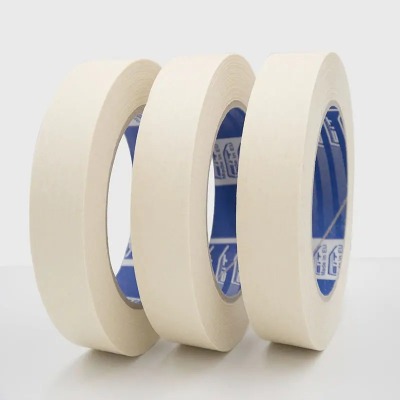
Automotive painting is one application where adhesive behavior can directly affect finishing work. The tape needs to stay firmly positioned while paint is applied, yet removal should be controlled to reduce the risk of unwanted adhesive transfer or damage to the surrounding finish.
The backing also needs to conform to curves and edges without making application unnecessarily difficult. For manufacturers, this means adhesive formulation and paper selection need to be considered together rather than developed independently.
Construction and renovation environments can involve painted walls, wood, metal, glass, and other substrates. Surface cleanliness and texture may vary from one project to another, creating different bonding conditions for the same masking tape.
An adhesive designed for these applications needs a practical balance between tack and removability. Engineers should therefore test finished tape on representative surfaces instead of relying on performance results from a single smooth substrate.
Industrial users may apply masking tape during processes involving cutting, coating, assembly, labeling, or temporary protection. In these situations, the tape can remain in place for a longer period than expected in ordinary household use.
Longer contact changes the evaluation criteria. Adhesive flow, cohesion, backing stability, and removal behavior may become more important. Testing should reflect the actual contact period and processing environment instead of focusing only on immediate adhesion.
Temperature is another factor that should be considered during product development. A masking tape stored in a warehouse, applied in a workshop, or exposed to process heat may experience different conditions throughout its service life.
Rather than assuming one formulation will suit every environment, manufacturers can compare adhesive behavior under the temperatures relevant to the target application. This helps reveal potential changes in tack, peel performance, cohesion, or residue.
SBR latex can be incorporated into adhesive systems according to the intended tape construction and formulation strategy. However, the latex cannot be evaluated separately from the other materials.
Engineers should consider:
A formulation that works for general-purpose masking may need adjustment when the tape is intended for a more demanding application.
Laboratory testing remains important, but realistic test conditions can provide more useful information for product development. Manufacturers can reproduce representative substrates, application pressure, contact time, temperature, and removal conditions to understand how the finished tape may behave in practice.
This approach can also help identify whether a performance issue originates from the adhesive, backing, coating process, or application environment.
For manufacturers developing masking tape for overseas markets, application requirements should guide raw material selection from the beginning. SBR Latex for Masking Tape can be part of a broader formulation strategy, but its suitability depends on how it interacts with the backing, adhesive components, coating process, and intended use. By connecting material selection with real application conditions, tape producers can develop products that are easier to position for automotive, construction, painting, and industrial customers.
We provide our customers with sustainable and environmentally friendly synthetic latex products and service.
Copyright © 2024 Zhejiang Tianchen Latex Industry Co., Ltd. All Rights Reserved.





 English
 Türk
 عربى
 Tiếng Việt
 русский
 Bahasa Melayu
 中文简体
