
The performance of SBR latex emulsion in industrial applications is closely tied to its stability, especially as manufacturers move toward higher solid-content formulations. As a type of synthetic latex, SBR emulsions must remain uniform during storage, transport, and processing. Any phase separation, coagulation, or viscosity drift can significantly affect downstream performance in products such as paper coatings, carpet backing, non-woven fabrics, adhesive systems, and construction materials.
A stable SBR latex is essential for maintaining reliable performance across various processes. High solids can offer advantages like faster drying, improved efficiency, and enhanced bonding strength. However, increasing polymer concentration also amplifies potential risks such as viscosity spikes, particle agglomeration, and instability during shear or temperature fluctuations.
Key reasons stability is a priority include:
Smooth Processing:
Stable latex flows uniformly, reducing machine fouling and improving coating smoothness.
Predictable Film Properties:
The polymer film formed after drying retains consistent elasticity, adhesion, and mechanical strength.
Reduced Waste:
Instability often leads to leftover coagulate or unusable material, increasing production costs.
Compatibility with Additives:
Fillers, pigments, and crosslinkers must blend well without causing destabilization.
For these reasons, high-solid emulsions demand precise formulation and controlled reaction conditions.
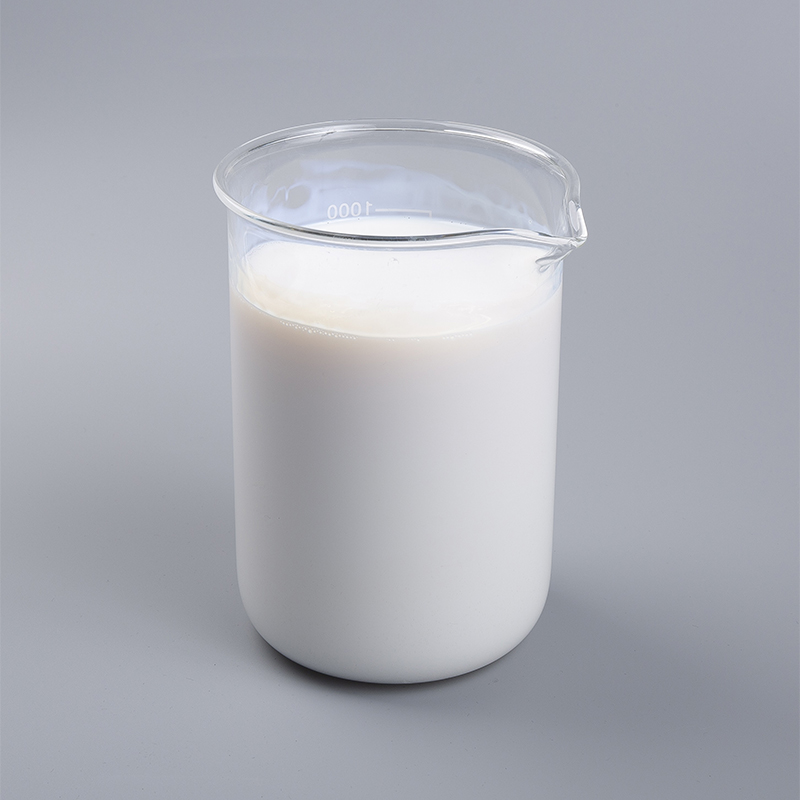
1. Surfactant System
Surfactants help maintain particle separation within the emulsion. The type and amount influence water resistance, film formation, and mechanical durability. An optimized surfactant system prevents coagulation without compromising adhesive performance.
2. Particle Size Distribution
Narrow and uniform particle size distribution improves viscosity behavior and reduces the risk of sedimentation or creaming. If particles differ too much in size, emulsion flow can become inconsistent during application.
3. pH Control and Electrolyte Balance
Incorrect pH or excess electrolytes can disrupt the inter-particle forces that stabilize the emulsion. Maintaining the correct ionic environment is essential for long-term stability.
4. Mechanical Shear Resistance
Latex emulsions often experience high shear during pumping, mixing, and coating. A well-designed SBR formulation must withstand these forces without breaking down.
5. Temperature Stability
Temperature changes during storage or transport can cause instability. Polymer composition and surfactant selection influence how well the latex tolerates thermal variation.
Paper and Cardboard Coating
High-solid SBR latex provides improved binding strength and controlled porosity, helping coated paper achieve better smoothness and print quality. Consistent emulsion stability ensures uniform coating thickness and reduces defects.
Recycled Leather and Textile Finishing
Stable SBR latex supports flexible film formation, which is important for softness, tensile strength, and durable surface performance. Uneven curing or instability can result in patchy finishes.
Carpet Backing
Latex used in carpet backing demands strong adhesion, controlled viscosity, and stable rheology. High-solid emulsions help reduce drying time and enhance final product consistency.
Construction Materials
SBR latex is added to cementitious systems to improve flexibility and water resistance. Stable emulsions ensure predictable interaction with cement hydration compounds.
Manufacturing consistency is crucial for delivering stable, reliable SBR latex. Zhejiang Tianchen Latex Industry Co., Ltd. employs automated control systems that closely manage reaction temperature, monomer feeding, polymerization rate, and emulsifier balance. This ensures:
Uniform particle size
Stable viscosity across batches
Strong mechanical resistance
High solids without sacrificing stability
Reliable storage properties
The company’s experience in producing synthetic latex for industries such as gloves, coated paper, construction, and textiles helps support customers requiring consistent performance under demanding production conditions.
We provide our customers with sustainable and environmentally friendly synthetic latex products and service.
Copyright © 2024 Zhejiang Tianchen Latex Industry Co., Ltd. All Rights Reserved.





 English
 Türk
Türk عربى
عربى Tiếng Việt
 русский
 Bahasa Melayu
 中文简体
中文简体